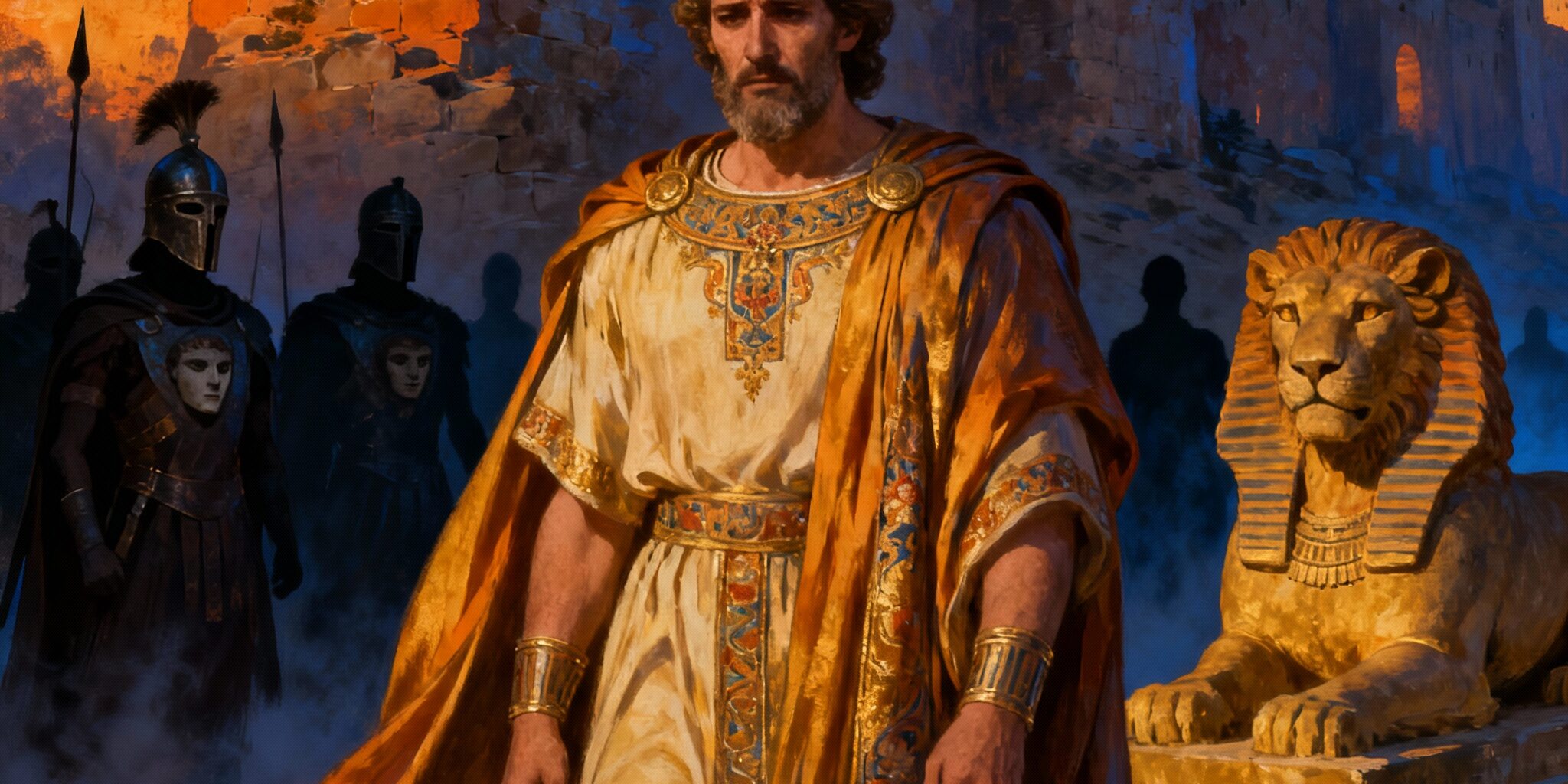
In Sophocles’ original Oedipus tale, King Laius is a shadowy figure, mentioned only in passing as a catalyst for tragedy. But in A Theban Tale, Laius takes center stage as a complex and pivotal character, whose dark choices and hidden burdens shape the fate of Thebes itself.
King Laius, the great-grandson of Cadmus, the legendary founder of Thebes, and also the son of Labdacus, inherits a throne shadowed by destiny and dark deeds. In A Theban Tale, Laius is not a distant figure, but a complex ruler burdened by personal demons and harrowing choices.
Despite his royal bloodline, Laius’s reign is tainted by grave sins, including acts of sexual violence against children, secrets violently hidden beneath his kingly facade. Desperate to protect Thebes from the terrifying menace of the Blemmyes, headless, savage beasts roaming the lands. Laius strikes a perilous pact with the mysterious Sphinx. In exchange for a monthly tribute, the Sphinx agrees to guard the city, ensuring its safety at a costly price.
Torn between his shameful past and the survival of his kingdom, King Laius lives at the edge of shadow and sacrifice. His story in A Theban Tale explores the tragic interplay of power, sin, and mythic forces, revealing the fragile boundaries between protector and prisoner in a world where darkness often hides behind noble titles.
